

Micro-grants and subsidized loan programs
At i-APS, years of monitoring micro-grants and subsidized loan programs have revealed a hard truth: standard success metrics only tell half the story.
When we rely solely on active operations and on-time repayments to measure success, we miss the messy, complex realities of small business survival. If we want to build true economic resilience for MSMEs, we have to look past the dashboard.
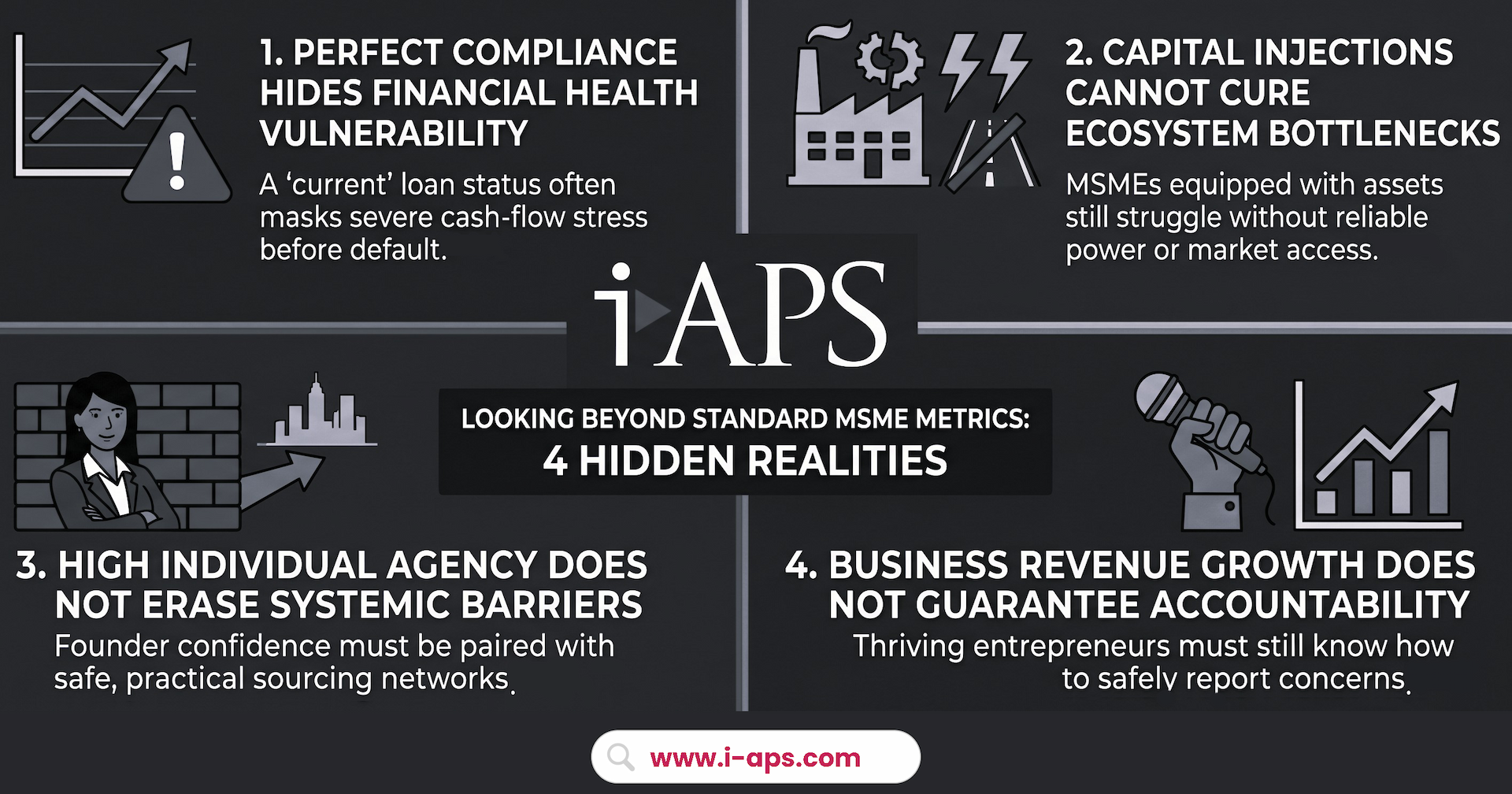
Here are four key lessons from our global work on what actually sustains a business:
📉 1. Perfect compliance hides vulnerability.A business can have a "current" loan status while quietly drowning in cash-flow stress. If we wait for a missed payment to offer support, it’s usually too late. We need early-warning indicators that catch liquidity pressure and schedule accommodations before a struggle turns into a default.
🚜 2. Capital can't fix a broken ecosystem.A cash injection will jumpstart operations, but money alone can't fix broader market infrastructure. An entrepreneur with new machinery in Honduras or Yemen will still struggle if they face daily power outages or impossible transport costs. We need "Capital Plus" interventions that pair funding with real-world operational solutions, like collective sourcing or shared market routes.
🚀 3. Empowerment doesn't erase systemic barriers.Tracking agency is vital—but even the most confident, capable business owner can be sidelined by market exclusion or restricted mobility. A founder making brilliant decisions in Venezuela still needs safe passage to regional markets. Programs have to bridge this gap by pairing agency-building with practical safety nets and accessible digital channels.
🗣️ 4. Revenue growth doesn't equal safety.A portfolio can boast incredible financial growth while completely failing to protect its participants. It is entirely possible for a thriving entrepreneur to have zero idea how to safely report a grievance or flag a safeguarding concern. Accountability must be measured independently and communicated in plain language—completely removed from the pressure of routine loan collection.